 Travel Voice | Japanese Travel Trade News Japan's No.1
‘Tabinka Summit 2026’ was held in Tokyo in June 2026 to discuss how activity operators can earn more money, joined by activity operators, DMOs, OTAs, tour operators and Japan Tourism Agency (JTA)
Satoshi Nagasaki, JTA Regional Development Department Director talked about recent changes in the inbound tourism market and the current state of "in-destination" tourism, showing some challenges, such as the growing concentration of tourism in major metropolitan areas, low levels of in-destination tourism spending, changes in information delivery and the need for greater understanding of tourism among third parties.
Nagasaki said, “Growth momentum of the inbound travel market is rapidly slowing. We have look at it more carefully.” The uneven distribution of visitor destinations is another issue. In terms of total overnight stays by foreign visitors, the ratio between major metropolitan areas and regional areas—which stood at approximately 60:40 in 2019—has shifted to roughly 70:30, with a particularly notable concentration of visitors in Tokyo.
“Tourism is not necessarily enjoying a tailwind,” he said. “We need to demonstrate the benefits tourism brings to regional economies through both statistical data and the tangible realities of daily life.”
Need to improve a low share of spending on local activities
Looking at spending patterns among visitors to Japan, the "explosive shopping" (*bakugai*) seen in the past has faded, and the share of spending allocated to shopping has declined. While the proportion of spending on accommodation has risen, expenditure on entertainment services—including in-destination tourism activities—remains at around 4.5% of the total, showing little change from pre-pandemic levels.
“Tourist satisfaction is not rising, nor is the contribution to local economies being tangibly felt under the circumstance,” Nagasaki pointed out. “We must improve the situation.”
A survey of inbound tourists conducted by the Japan National Tourism Organization (JNTO) found that while information regarding transport routes and restaurants received high ratings, information concerning events and experiential activities was rated extremely poorly.
As travelers now gather travel information on SNS, Nagasaki said, “It is necessary for us to post information to be found by AI.”
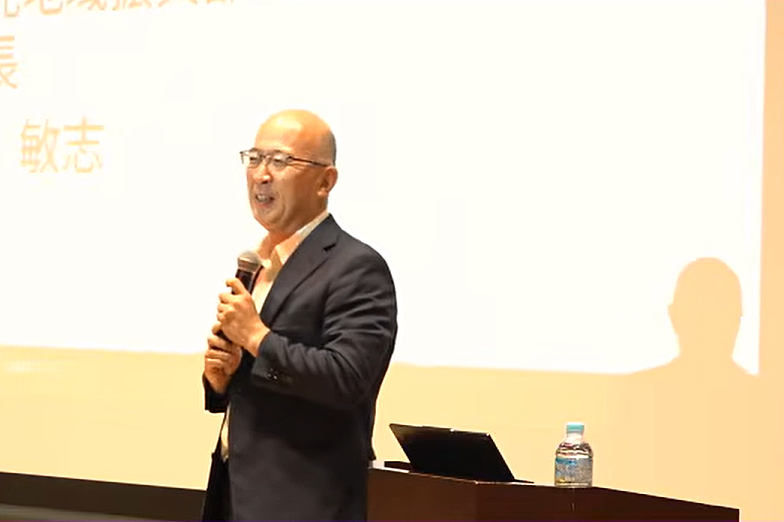 観光庁 観光地域振興部長 長崎敏志氏
The tourist's perspective are essential to create local activities
A session titled "Designing Profitable In-Destination Experiences Based on OTA Data," hosted by activity OTAs, drew significant attention from attendees. Speakers suggested how important activity operators design and sell products from tourist's perspectives, not only from their own business values.
Miharu Tanaka, Klook Travel Technology DMO Partnership Manager, said, “It is easy to assume that visitors to Japan are seeking Japanese cuisine, but that is not necessarily the case. It is crucial to understand the diverse needs that exist across different markets,” citing to the Indian market.
Wataru Futagi, VELTRA CEO, said, “From the long term perspective, it's crucial to capture demand from both Japanese and foreign tourists to increase average spending per customer,” showing his idea that offering a diverse range of products tailored to specific target audiences leads to sustainable business operations.
Takao Nishina, GetYourGuide's Head of Japan, said that regional cities increasing sales offer a variety of experiences, based on the GetYourGuide data.
In addition, topics at the session ranged from shifting trends in the local activity market to the use of AI and emerging product trends. Regarding word-of-mouth, speakers shared an idea that consistently responding to reviews with a unified tone gives inbound tourists the confidence to make bookings.
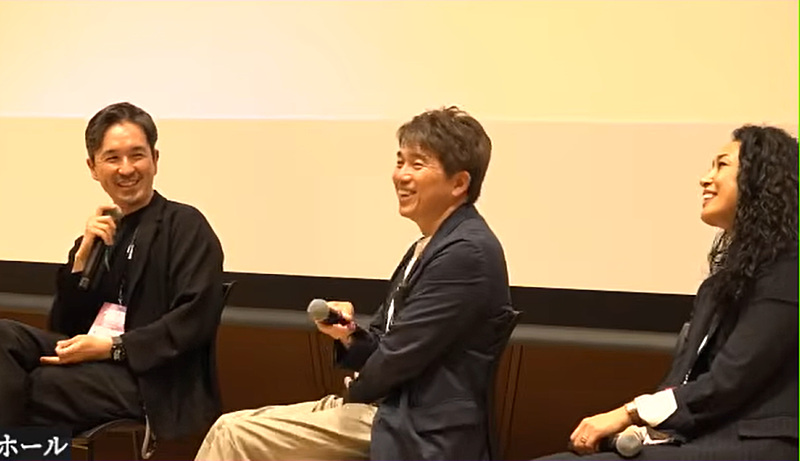 左から)ゲットユアガイドの仁科氏、ベルトラの二木氏、クルックの田中氏