



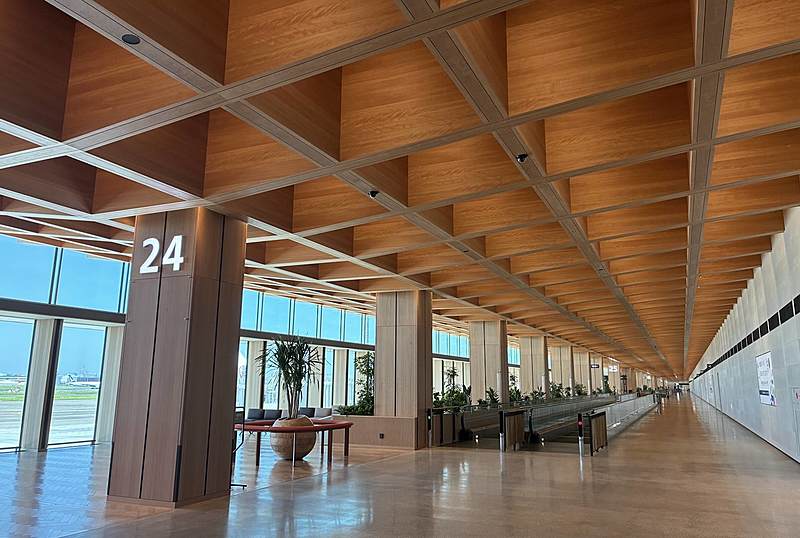
The Terminal 1 North Satellite for domestic flights of Haneda Airport opened on September 1 2026. This satellite was completed at the end of May 2026 following a construction period of approximately two years.
The addition of six boarding gates—24 through 29—alleviates the burden of bus transfers previously required for boarding and disembarking aircraft. This marks the first major facility expansion for Terminal 1 since it began operations in September 1993.
“The defining feature of this satellite is its hybrid structure, combining steel and timber. It embodies our long-term vision of creating an advanced airport that is friendly to both people and the environment,” Satoru Sumimoto, Senior Managing Executive Officer and General Manager of the Passenger Terminal Operations Division at Japan Airport Terminal, explained. “In addition, we are considering further functional expansions, such as enhancing international facilities at Terminal 2, partially converting Terminal 1 for international use, and connecting Terminals 1 and 2.”
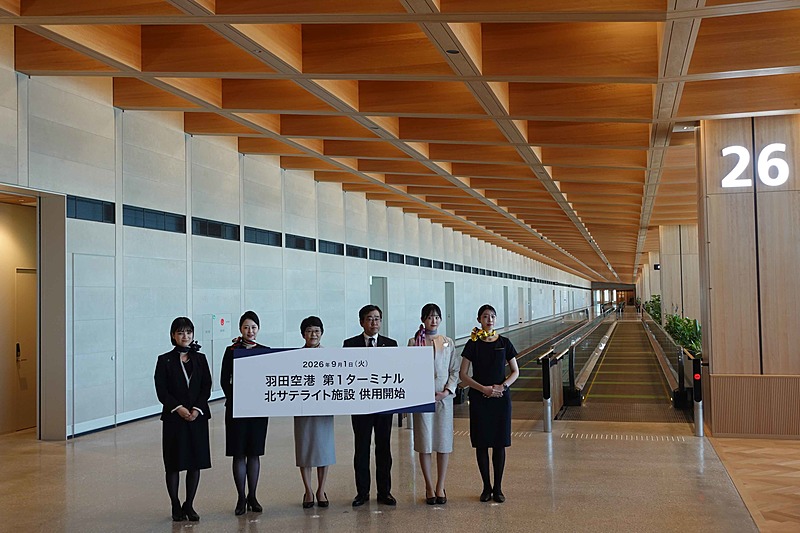 JAL斉藤氏(中央左)、日本空港ビルデング炭本氏
Human-and environment-friendly satellite
The North Satellite of Terminal 1 is designed to accommodate future growth in air travel demand and further enhance passenger convenience, aligning with national initiatives to strengthen the functionality of airports in the Tokyo metropolitan area and improve disaster prevention and mitigation measures.
It marks the first time at Haneda Airport that a "steel-wood hybrid structure" has been adopted, utilizing domestically produced Japanese larch and cedar as structural materials. The volume of wood used is equivalent to approximately 10,000 trees.
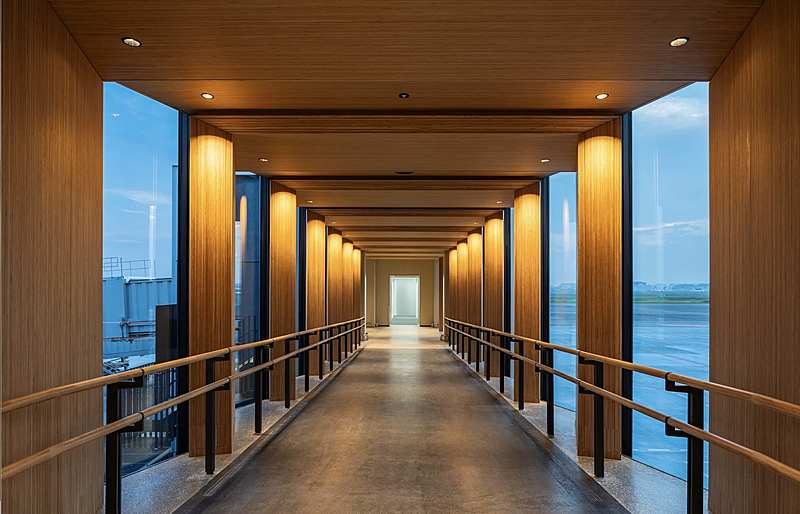 出発時の固定橋も森をイメージ
As the environment-friendly satellite, primary energy consumption can be reduced by more than 30%, and the satellite generates approximately 530,000 kWh of electricity annually through solar power, covering about 80% of its electricity needs.
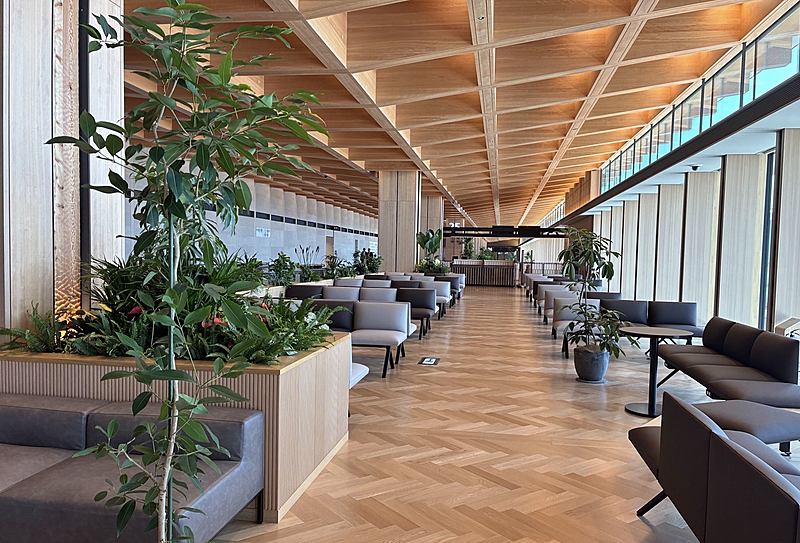 木の温もりを感じるゲートラウンジ
To support passenger mobility, the North Satellite features a total of ten moving walkways (serving both directions) and facilitates movement through the expansion of the operational area for "WHILL" autonomous mobility services, alongside the introduction of the new "iino" autonomous mobility model.
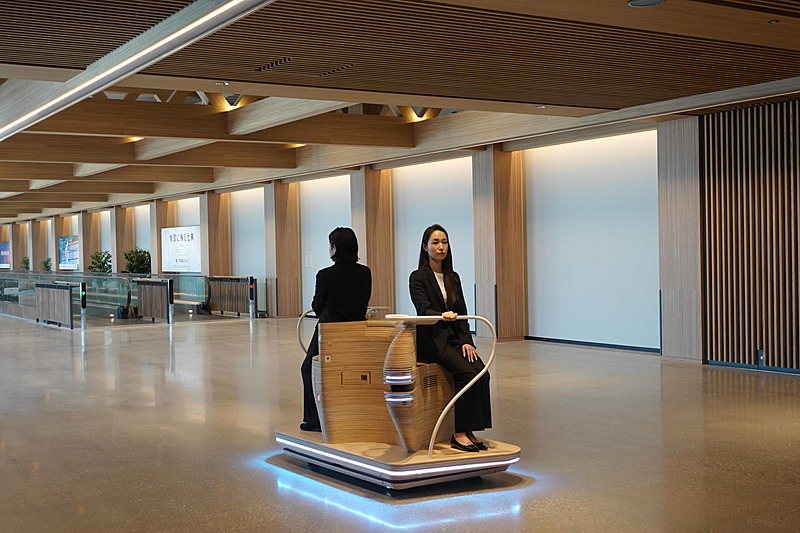 自動走行モビリティ「iino」も木を意識した設計
A card lounge named "FOREST LOUNGE" also opened near Gate 26. The usage fee is 1,320 yen for adults (660 yen for children aged 4 to 12), though passengers holding affiliated credit cards may use the lounge free of charge.
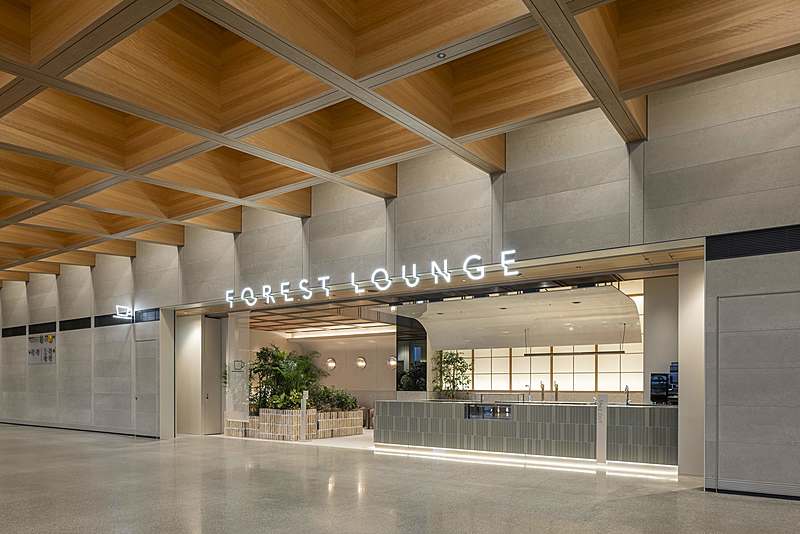 「FOREST LOUNGE」はゲートラウンジと連続性のあるオープンな設計に
Furthermore, a kids' space incorporating the concept of "Moku-iku" (wood-based education) is set up near the North Satellite entrance. Materials made from recycled PET bottle caps are used for some of the chairs and play equipment, creating an environment where visitors can experience resource recycling firsthand.
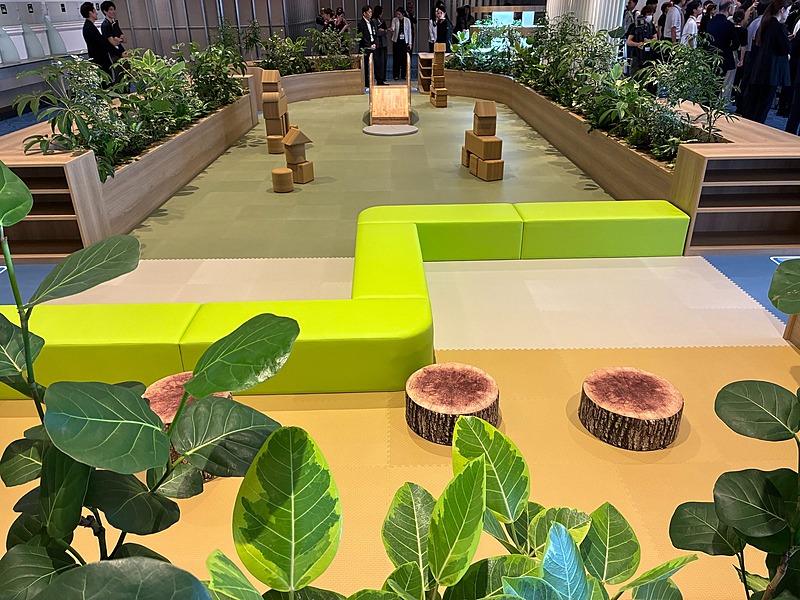 キッズスペースは、日本空港ビルデングの「Airport
Forest Circle Project」のひとつ
キッズスペースは、日本空港ビルデングの「Airport
Forest Circle Project」のひとつ