



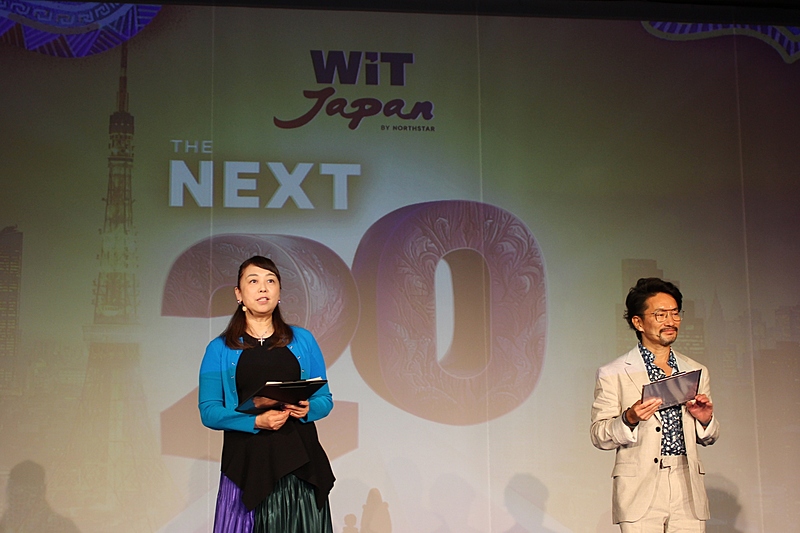
WiT Japan 2026 was held with a main theme of ‘The Next 20’ and a sub-theme of ‘Quiet Power’ in Tokyo on June 1 and 2 2026. Speakers showed their concrete stories based on local characteristics in Japan under the AI era.
One of the symbolic sessions was about ‘Omotenashi (hospitality in Japanese) in the AI era’ talked by Eijiro Yamakita, JTB CEO. He stressed that AI and technologies can raise powers of Japanese Omotenashi.
“We cannot talk about the future without AI. AI will be implemented in every process. Everyone will live with AI, and AI will be the interface with customers,” he said. “AI excels at creating one-on-one customer touchpoints. On the other hand, the value of travel is created by the destination and the human connection.” The notion is rooted in JTB’s long-term vision ‘OPEN FRONTIER 2035.’
Yamakita regarded AI as a power to make up for weakness of Japan. To boost the outbound travel market, “We have to deliver personalized and value-centered information, not through conventional promotions. AI can help us do that.”
Also, he shows his idea that it would be more important for you to ‘feel’ something, as values of travel have been shifting from sightseeing to experience. “Even in the age of AI, people will still want to be human. Perhaps Japan has a spirit of creating harmony and other qualities, which maybe contribute to the world.”
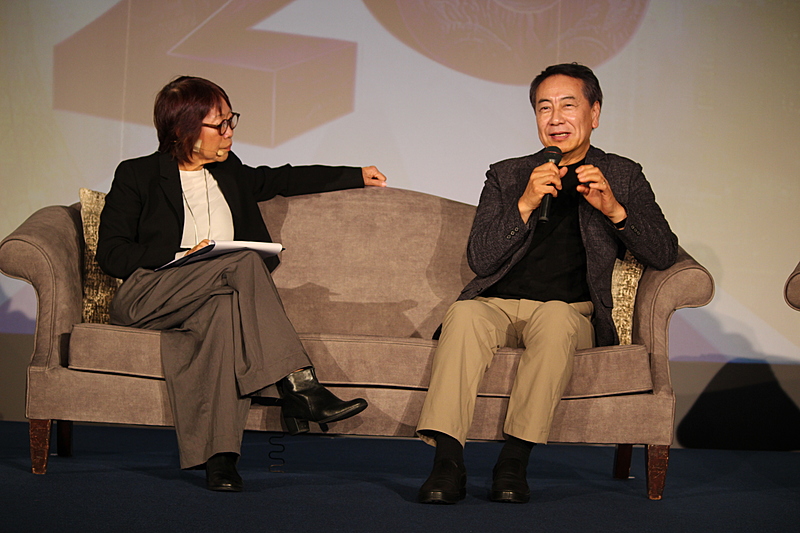 (左から)WiT創設者のイェオ・スーフン氏、JTB代表取締役 社長執行役員の山北栄二郎氏
What kind of mindset should we have in the age of AI?
Aya Aso, Co-founder WiT Japan, said at a kick-off session that AI will become the entry point for travelers gathering information and comparing options, and businesses that are not found by AI will not be recognized by consumers. Katsuya Seki, ZIPAIR Vice President, Marketing, followed the opinion, saying that companies cannot be chosen by customers unless companies thoroughly pursue it.
Mizuho Hiraguri, Recruit Corporate Development, referred to the Japanese cultural background of ‘Though can be conveyed without being said,’ which maybe a weak point of Japan in the AI era. She said that it is important to articulate and communicate value appropriately.
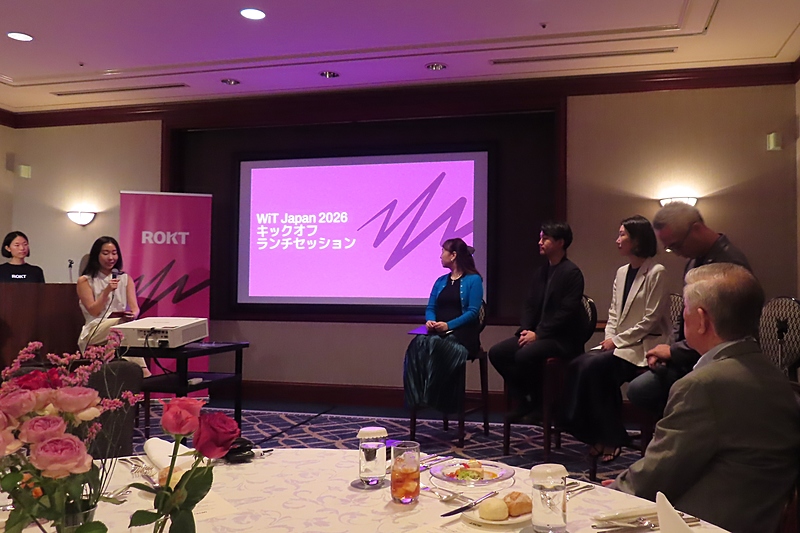 WiT Japan2026 招待制キックオフセッションの様子
In a session featuring Japanese OTAs (Jalan, Rakuten, and JTB), they emphasized the need for restructuring and improving accuracy for the next 20 years. Naohisa Minagawa, Rakuten Group Head of Strategy & Business, said, “The way of working and the way of thinking about value provided to users, based on methods from the pre-AI era, must be reset at this time.”
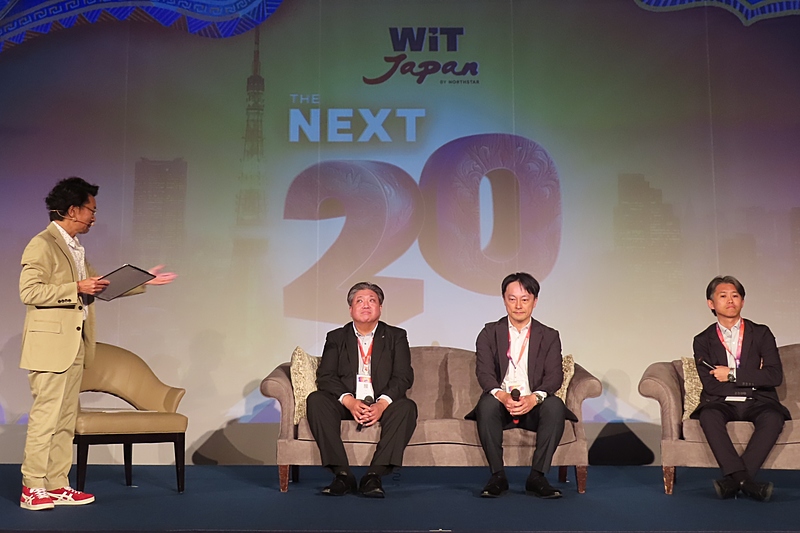 日本のOTA3社(じゃらん、楽天、JTB)が登壇したセッション「The Great Japan Travel Reset」
How can Japan leverage its "strengths" in the age of AI?
The discussions at each session of WiT Japan 2026 were not about the pros and cons of introducing AI. Rather, they focused on how to create and restructure value for one's own company and region, based on the premise of AI.
How can Japan's strengths—its Omotenashi, regional charms and human connections—be expressed and delivered using AI? Many speakers suggested that this is where the next competitive advantage lies.
In ‘Rewriting Japan’s Travel Playbook’ session moderated by Michael Dykes, Expedia Group Vice President, Market and Management APAC, speakers discussed the transformation of Japan's tourism industry, which faces labor shortages, productivity improvements, and a delay in digitalization. Amid a declining birthrate and aging population, they showed the idea that Japan can solve these challenges ahead of the rest of the world, using AI and technology, and will possibly develop the solutions into exportable products.
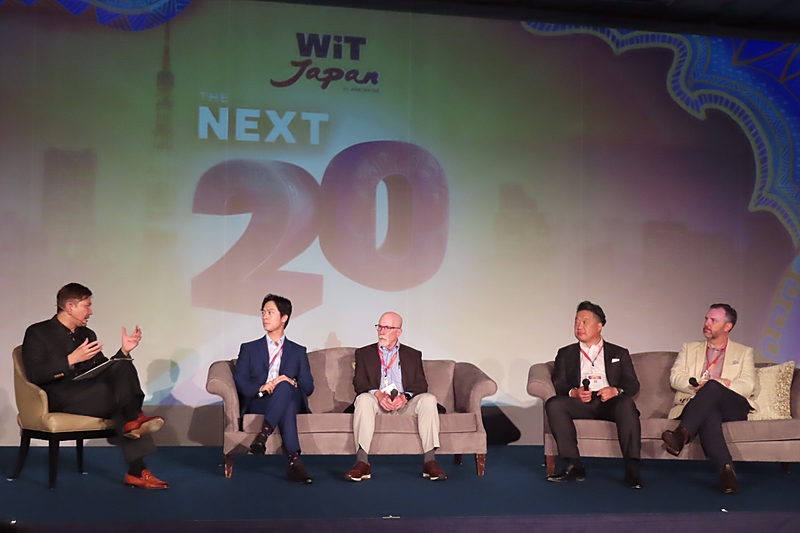 セッション「Rewriting Japan’s Travel Playbook」。パネリストには航空会社や滞在型宿泊事業者、日本の高齢化社会を研究してきたコンサルタントなど、多彩な顔触れが参集
WiT Japan 2026 featured ‘Precision,’ ‘Reinvention’ and ‘Quiet Power’ as sub-themes. Aso and Kei Shibata, Co-founder WiT Japan explained that they focused on the unique perspectives of Japan and this region in a world where AI and automation are accelerating. Japan's refined craftsmanship, discipline, and long-term thinking are not merely ‘Japanese strengths,’ but rather ‘potential competitive advantages’ in the next 20 years under the AI era.
This was the 12th WiT Japan this year, and WiT Singapore celebrated the 20th anniversary. Yeoh Siew Hoon, WiT Founder, said, “Technological changes are accelerating. Can humans keep up with this speed? That's why we need to build closer human relationships,” recalling the WiT’s history from the advent of the internet to the arrival of mobile technology.
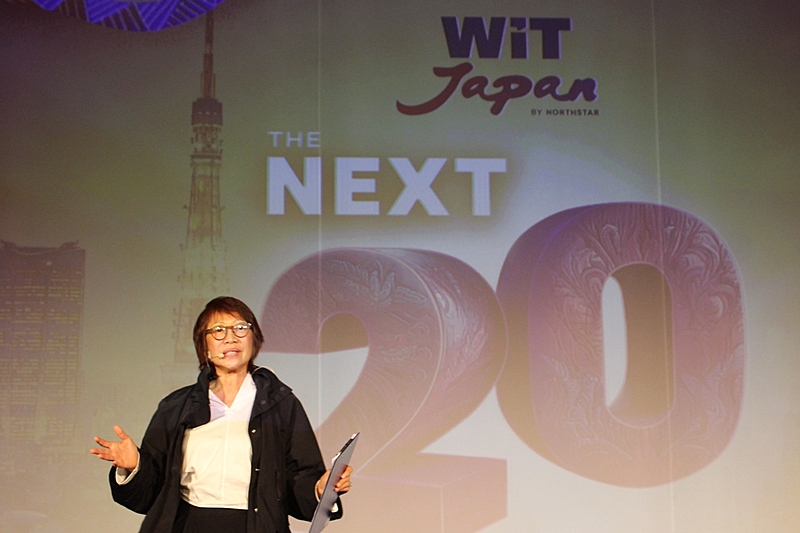 WiT創設者のイェオ・スーフン氏